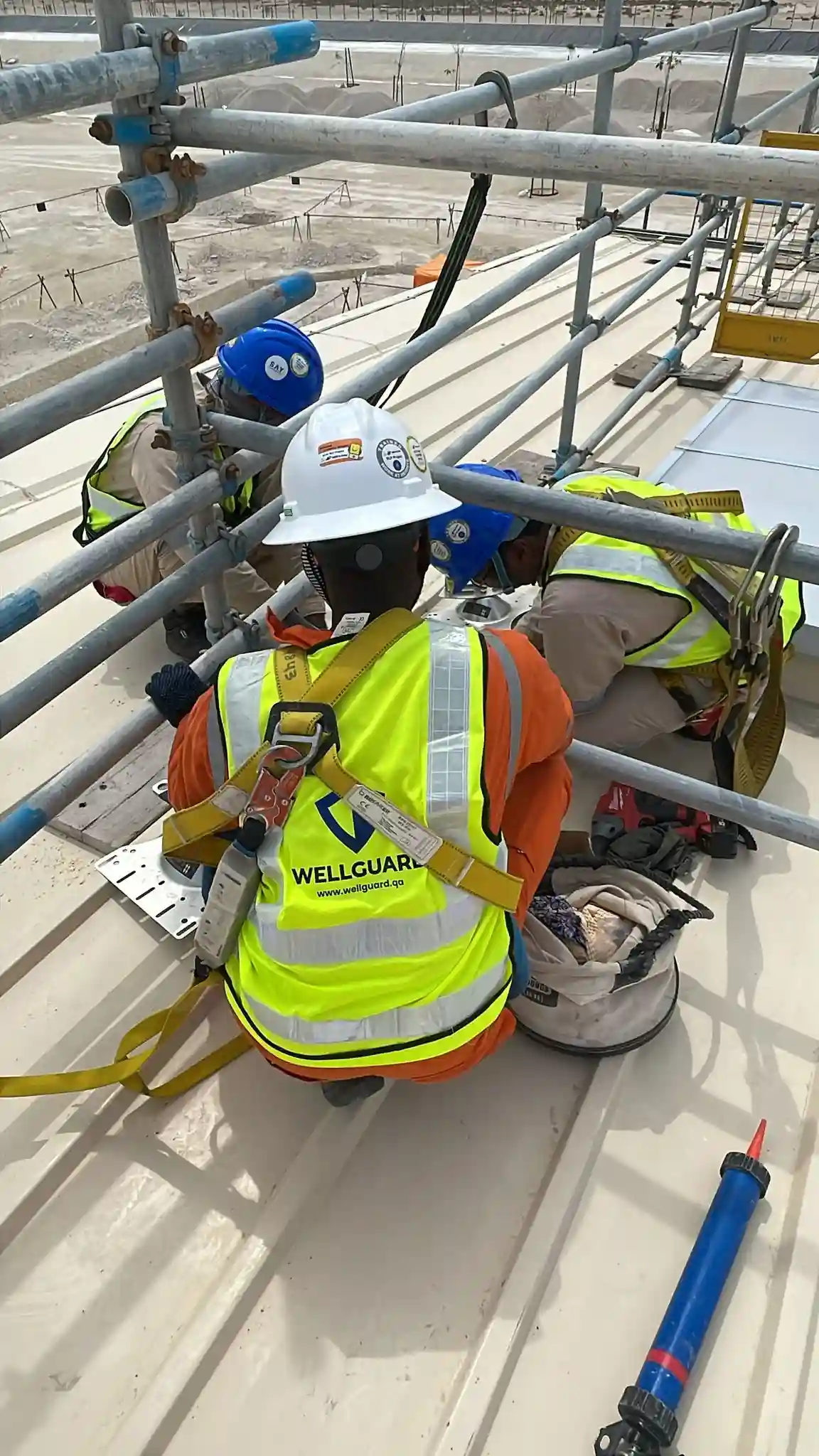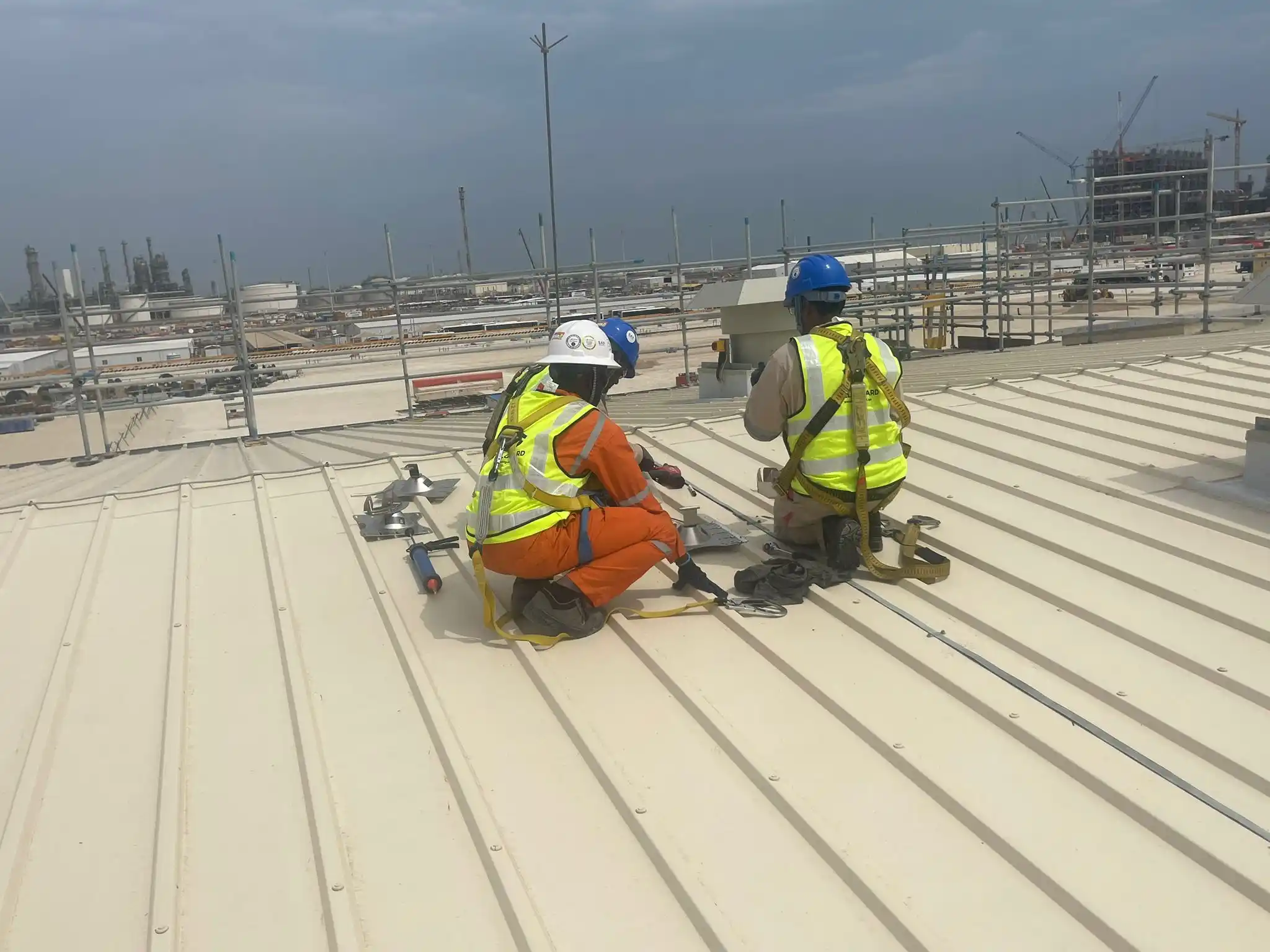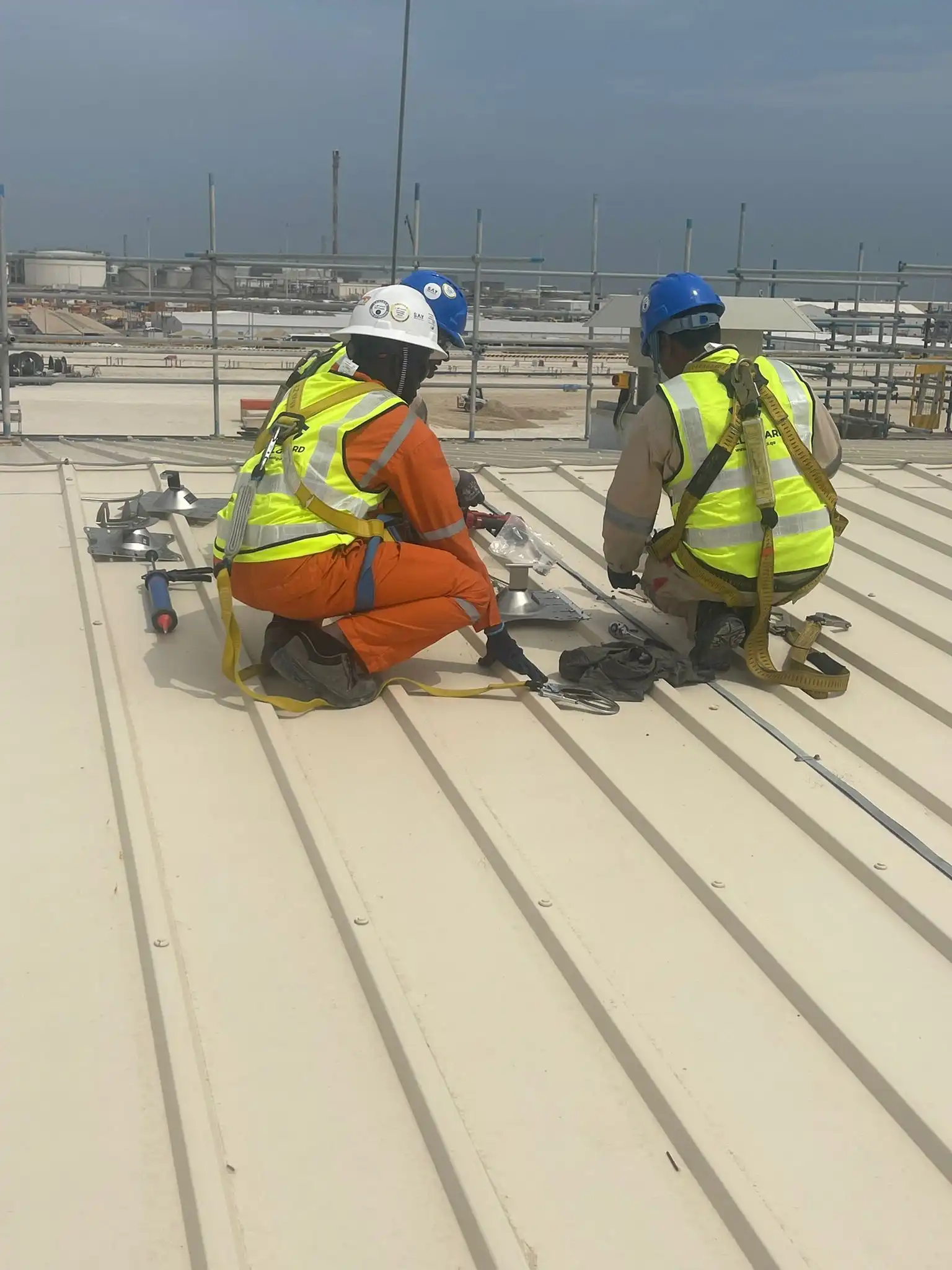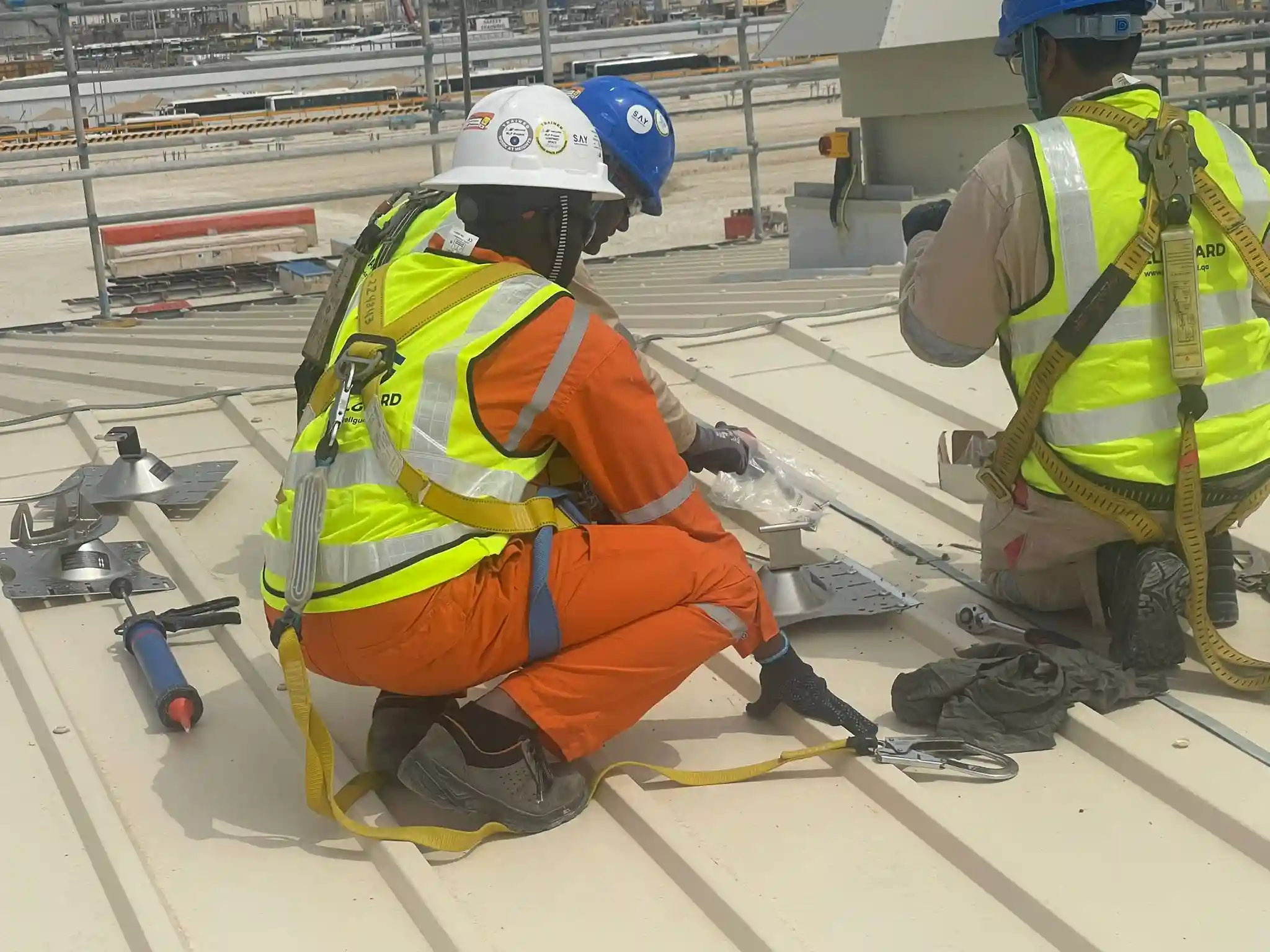
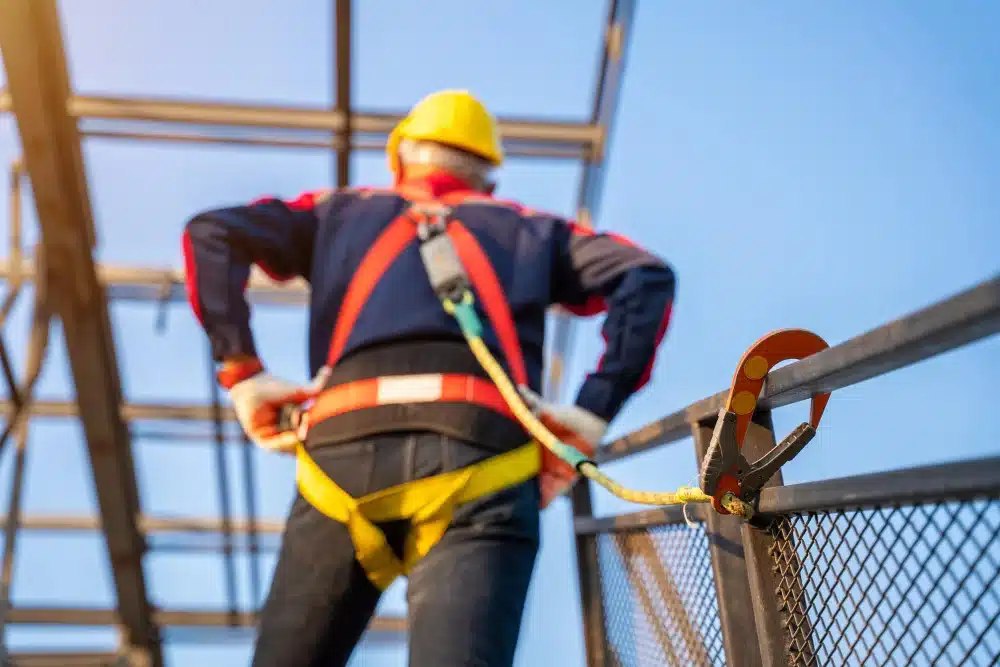
Installation Process
The installation process followed a structured approach to maintain safety and efficiency at every stage.
- Layout Planning
Engineers mapped out lifeline routes based on roof structure and work zones. - Anchor Location Identification
Anchor points were selected based on load-bearing capacity and spacing requirements. - Work Area Safety Preparation
The site was secured using PPE and temporary safety measures before installation began. - Anchor Post Installation
Posts were fixed using appropriate mounting techniques to ensure structural integrity. - Intermediate Support Installation
Supports were added to maintain cable alignment and reduce sag. - Lifeline Cable Installation
Stainless steel cables were installed across the anchor points. - Cable Tensioning
Proper tension was applied to maintain system performance and reduce deflection. - Identification and Tagging
Each section was labeled for inspection and maintenance tracking.
Such installations require specialized tools and expertise, often supported by providers of industrial tools & machinery sales in Qatar to ensure accuracy during execution.
Safety Management and Responsibilities
Strict safety protocols were followed throughout the project to minimize risks and maintain compliance with site regulations.
Key Roles Included:
- Project Manager: Oversaw execution, timelines, and coordination
- Site Engineer: Managed technical implementation and layout accuracy
- HSE Officer: Ensured adherence to safety standards and conducted risk assessments
- Certified Installers: Carried out installation tasks using approved methods
A strong safety framework is essential in projects involving height work. Companies often depend on trusted safety equipment suppliers in Qatar to maintain consistent protection standards across operations.
Tools and Equipment Used
The installation team relied on specialized tools to complete the project effectively and safely.
Key Tools Included:
- Swaging tools for cable terminations
- Riveting machines for secure fastening
- Drill machines for anchor installation
- Safety harness systems
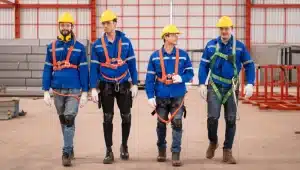
- PPE kits including helmets, gloves, and protective wear
- Fall arrest devices
Proper selection and usage of tools play a major role in maintaining system reliability. Access to certified gear, such as safety harness suppliers in Qatar, ensures that workers remain protected during installation and future use.
Wellguard’s Expertise in Industrial Safety Systems
Wellguard has built a strong presence in delivering industrial safety solutions across Qatar. With hands-on experience in fall protection systems, the company supports projects that demand technical accuracy and strict safety compliance.
Its portfolio includes the supply and installation of lifeline systems, safety equipment, and specialized gear required for high-risk environments. Businesses seeking dependable solutions often explore services offered by a lifeline supplier in Qatar to ensure proper system design and implementation.
In addition to fall protection, Wellguard also supports industries with a wide range of equipment, including confined space systems, lifting solutions, and safety wear. Access to services such as confined space equipment supplier in Qatar and industrial lifting equipment supplier in Qatar allows companies to maintain safety across multiple operational areas.
For projects requiring controlled movement and load handling, equipment like winches also plays a role, supported by providers such as wire rope winch suppliers in Qatar. Additionally, proper use of connecting elements like lanyards is essential in fall protection systems, making lanyard suppliers in Qatar an important part of the safety ecosystem.
To maintain a site-wide safety culture, organizations also focus on protective gear and apparel, often guided by insights available through resources like safety wear suppliers in Qatar. For large-scale developments, coordination with experts in construction project management consultancy in Qatar helps align safety systems with overall project execution.
FAQs
- What was the purpose of installing the horizontal lifeline system at the Ras Laffan Petrochemicals Project?
The purpose of the installation was to ensure safe access for workers performing maintenance tasks on the warehouse roof, reducing the risk of falls. - What type of lifeline system was used in this project?
The system used in the project is a KARAM horizontal lifeline. It features stainless steel cables and energy-absorbing components. - Who were the key stakeholders involved in this project?
In the project, the client was Qatar Energy. The consultant was Chevron Phillips Chemicals, and contractors include Samsung E&A, CTCI, and Gulf Asia, with Wellguard handling supply and installation. - Where are horizontal lifeline systems commonly used?
Industrial facilities, warehouses, construction sites, and any environment where workers need to operate at height are common areas where horizontal lifelines are used. - What is the safe working height that requires fall protection?
Fall protection is required in most industrial standards when working at heights above 1.8 meters. However, specific regulations may vary depending on site policies and regional guidelines.